RV Converter Repair - Mobile RV Repair Palm Bay
RV Repair Palm Bay tests and replaces RV converters on-site, distinguishing converter failure from bad 120V input, blown fuses, or a faulty converter fan that causes thermal shutdown. We service WFCO, Progressive Dynamics, Parallax, and Iota units. A converter that outputs less than 13.4V under load is undercharging your house batteries and shortening their life - we measure output voltage and ripple as the first diagnostic step.
RV Repair Palm Bay tests and replaces RV converters on-site, distinguishing converter failure from bad 120V input, blown fuses, or a faulty converter fan that causes thermal shutdown. We service WFCO, Progressive Dynamics, Parallax, and Iota units. A converter that outputs less than 13.4V under load is undercharging your house batteries and shortening their life - we measure output voltage and ripple as the first diagnostic step.
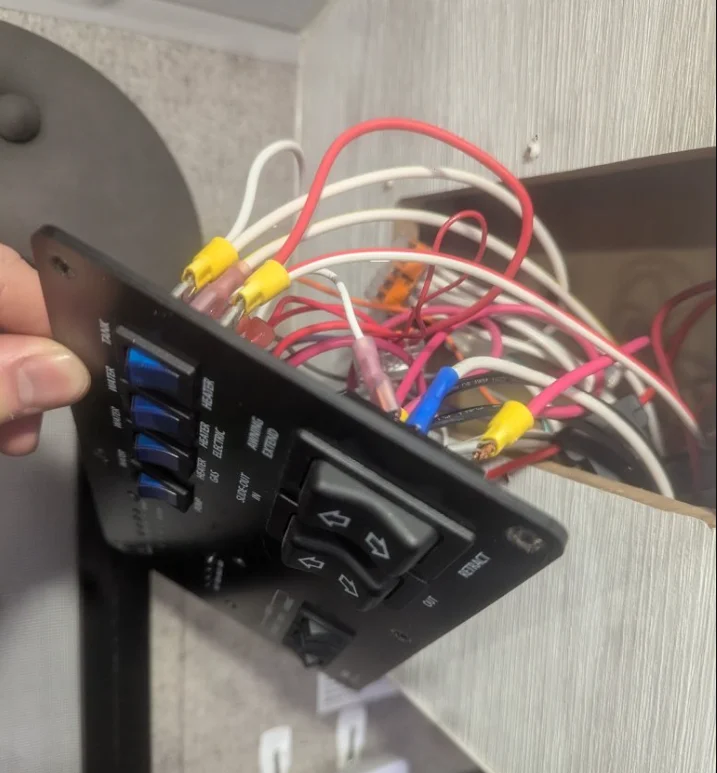
Palm Bay: RV electrical repairs in Palm Bay have a different starting point than campground-based markets. Most Palm Bay rigs are plugged into household 30-amp or 50-amp outlets, not campground pedestals. Household outlets lack the surge suppression and automatic voltage cutoff of modern campground pedestals, which creates converter charger failures, shore power inlet damage, and battery bank wear patterns that are more common in Palm Bay than anywhere else in south Brevard County.
Before any electrical diagnosis at a Palm Bay driveway, we check the household outlet voltage and inspect the shore power inlet connector - because connector resistance from repeated plug cycles into a residential outlet is a failure mode that can cause a vehicle fire without any visible warning. We come to your Palm Bay driveway with a Fluke multimeter, clamp meter, 12V load tester, and shore power analyzer. No shop visit required.
How an RV Converter Works and Why Output Voltage Under Load Is the Critical Diagnostic Measurement
The RV converter takes 120V AC shore power and converts it to regulated 12V DC to power lights, slides, fans, and water pump while simultaneously charging the house battery bank. A converter that is functioning correctly outputs between 13.4 and 13.6 volts at the 12V DC distribution bus during normal float operation and steps up to 14.2 to 14.6 volts during bulk charging when the battery bank is depleted. Output below 13V under load means 12V appliances are running on battery power rather than converted shore power, depleting the battery bank even when plugged in.
Output above 15V indicates a failed voltage regulation circuit that will boil electrolyte from flooded batteries and damage AGM cells. Our technicians test converter output voltage under a 10-amp controlled load as the first diagnostic step - it establishes immediately whether the converter is regulating correctly, regulating at the wrong voltage, or not converting at all - and determines the correct course of action before any component is removed or replaced.
Upgrading from Parallax or WFCO to Progressive Dynamics - Why It Matters for Battery Life
Parallax and first-generation WFCO 8900 series converters use a single-stage, fixed-voltage output that was the standard in the RV industry through the early 2000s. These units output a constant voltage regardless of battery state of charge, which chronically overcharges wet-cell batteries during long shore power stays and fails to fully charge AGM batteries that require a higher bulk charge voltage followed by a reduced absorption stage. The Progressive Dynamics PD9200 series with integrated Charge Wizard module runs a four-stage charging profile - bulk, absorption, float, and a periodic storage mode - that significantly extends battery life compared to single-stage converters.
The PD9200 units use the same mounting footprint and wire gauge as most Parallax and WFCO installations, making them a direct upgrade in most cases. RV Repair Palm Bay stocks PD9200 series units in 45-amp and 60-amp variants and recommends the upgrade whenever a Parallax or original WFCO unit fails, rather than replacing it with an equivalent single-stage unit.
How This Repair Works On-Site in Palm Bay
- Call and describe the problem. Tell us what is happening, when it started, and what you have already checked. We ask a few questions to load the right parts before leaving the shop.
- We arrive at your Palm Bay or Brevard County location. No towing required. Your tech drives to your driveway, storage lot, or campsite - typically within 2 hours of your call.
- On-site diagnosis before recommending any work. We use the right test equipment for this repair type to find the actual root cause. We do not guess or replace parts speculatively.
- Written estimate provided at your location. You see the full cost before we start. You approve it before we touch anything.
- Same-visit repair when parts are on the van. Most common rv converter repair repairs are completed the same visit. If a part needs to be ordered, we schedule a follow-up and confirm the quote holds.
Common Causes and Related Repairs
Most rv converter repair issues in Palm Bay trace to one of three causes: age-related component wear accelerated by Florida's sustained UV heat and driveway storage conditions, corrosion from Indian River Lagoon salt air on eastern Palm Bay rigs, or deferred maintenance from an RV that sat in a driveway for months without being run or inspected.
When we diagnose a rv converter repair problem, we also check the converter or battery bank as part of the same visit - the two systems interact, and catching a secondary issue during the same call saves you a second service fee.
We tell you everything we find.
If a related issue needs attention but is not urgent, we note it in writing and let you decide when to address it.
Cost Factors for RV Converter Repair Repair in Palm Bay, FL
The main factors that affect the cost of your rv converter repair repair in Palm Bay are: the specific RV make, model, and year (which determines part size and access difficulty); the severity of the failure (a component that failed cleanly versus one that failed and damaged adjacent parts); and parts availability for your specific system. Palm Bay driveway service adds no extra travel fee for most locations within the city.
South Brevard County and Micco Road corridor service may add a small travel supplement depending on distance. Same-day parts availability varies by component - most common rv converter repair parts are on the van for same-day repair.
Less common components require a dealer or parts order that typically runs 1 to 3 business days. All estimates are fixed-price - the amount we quote is what you pay, with no hidden labor overruns.
Pricing note: Ranges shown are average costs for the Palm Bay, FL market based on common repair scenarios. The exact cost of your repair depends on your RV make and model, the severity of the issue, and parts availability.
Only a technician on-site can provide an accurate estimate after inspecting your RV. A written estimate is provided before any work begins - you approve it before we start.
RV Converter Repair FAQ
What is the difference between an RV converter and an inverter, and how do I know which one failed?
The converter takes 120V shore power and converts it to 12V DC to run lights, slides, and charge batteries - the inverter does the reverse. If your 12V lights and slides are dead when plugged into shore power but your AC outlets work, the converter has likely failed. If your AC outlets produce no power when unplugged from shore, the inverter is the suspect.
My WFCO 8955 converter fan runs constantly and the unit feels very hot - is that normal?
The WFCO 8955 fan should cycle based on temperature load, not run continuously. Constant fan operation at high temperature usually means the converter is working harder than it should because of a partially shorted battery bank drawing excess current. We test the battery bank load and the converter's output stage together to find the root cause and prevent premature converter failure.
Can I upgrade my old Parallax converter to a Progressive Dynamics unit during the repair visit?
Yes - Progressive Dynamics PD9200 series converters are a direct upgrade over most Parallax and older WFCO units and use the same mounting footprint in many rigs. The PD Charge Wizard built into PD9200 units runs a multi-stage charge profile that extends battery life significantly compared to older single-stage converters. We stock PD9200 series units and can complete the swap in a single visit.
How do I know if my RV converter or my batteries are causing slow slide and awning operation?
Slow slides and awning motors on shore power are almost always caused by either a converter outputting below 13V or a battery bank with high internal resistance that droops under the motor startup current. We test converter output voltage first - if it is above 13V with the motor running, the converter is adequate and the battery bank resistance is causing the voltage drop at the motor. If converter output sags below 12V during motor startup, the converter is undersized or failing and the battery bank is compensating, which depletes it rapidly.
Can I add a separate battery charger to my RV if the converter is not charging properly?
Yes - adding a quality multi-stage charger like a NOCO Genius or a Victron IP22 to supplement a weak converter is a valid short-term solution, and many full-time RVers add a dedicated charger even with a functional converter for faster bulk charging from shore power. The better long-term solution for most rigs is replacing the converter with a Progressive Dynamics unit that combines regulated 12V supply and multi-stage battery charging in a single device, which eliminates the secondary charger and reduces wiring complexity.
Can rv converter repair be repaired on-site in Palm Bay, FL?
Yes. Most rv converter repair repairs are completed on-site at your Palm Bay driveway, storage facility, or campsite without towing.
We carry the most common parts for this repair type on the service van. If a specific part needs to be ordered, we confirm the diagnosis and quote before you commit to the repair.
How long does rv converter repair take to repair?
Most rv converter repair repairs take 1.5 to 2.5 hours on-site at your Palm Bay location. Complex repairs involving multiple components or restricted access can take longer. We give you a realistic time estimate when we diagnose the problem before starting any work.
What does rv converter repair repair cost in Palm Bay, FL?
The service call is $299 to $399, covering travel to your Palm Bay location and the first hour of diagnostics. The cost of the repair depends on the specific parts needed and labor time.
We provide a written, fixed-price estimate before any work begins. You approve the price before we start.