RV Roof Leak Repair & Resealing - On-Site
RV Repair Palm Bay patches and reseals RV roofs on-site throughout south Brevard County. Palm Bay's large lots and tree canopy in areas near Turkey Creek Sanctuary mean RVs often develop moss and algae growth on the roof before sealant failure shows up - we clear organic debris before resealing so the product bonds to clean rubber rather than biofilm.
We use Dicor lap sealant and EPDM materials. Emergency same-day roof repair available.
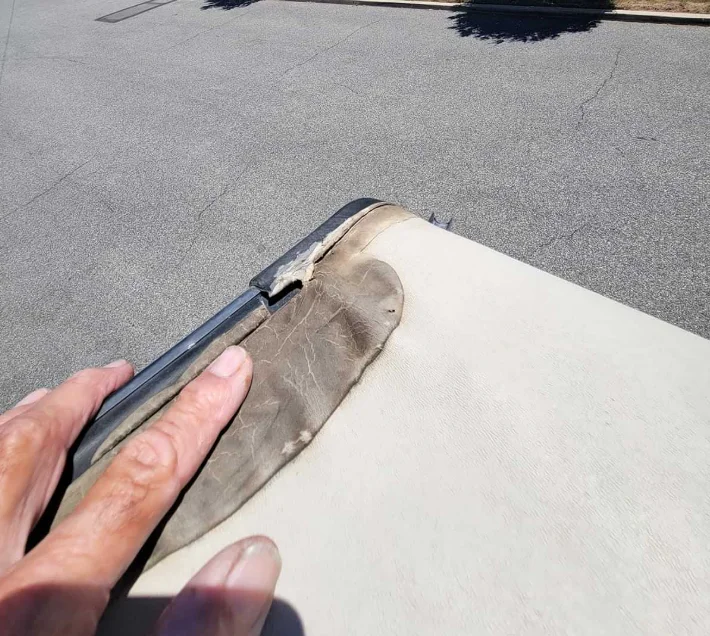
Diagnosing Roof Leaks on Palm Bay Driveway-Stored RVs
Roof diagnosis in Palm Bay requires two steps that campground-market diagnosis does not: checking for organic growth and checking lower sidewall entry points. Palm Bay neighborhoods with established tree canopy - especially near Turkey Creek Sanctuary - develop moss and algae on EPDM roofs that is not visible from the ground.
Organic growth traps moisture against the rubber membrane and accelerates both sealant failure and membrane oxidation. We walk the full roof before diagnosing any sealant failure, because resealing over biofilm produces a repair that lasts 6 months instead of 3 years.
The second step is checking lower sidewall caulk joints and underbelly panels after any significant rainy season storm. Palm Bay's flat residential driveways pool water under and around parked RVs during heavy summer rain events - often 2 to 3 inches of rain in an hour on flat terrain. Travel trailers and fifth wheels are designed for campgrounds with graded drainage.
In Palm Bay driveways, low-side floor vents and underbelly compartment panels sit closer to pooling water than the manufacturer assumes. A ceiling stain that appears after a storm may trace to a lower sidewall entry point, not a roof penetration.
Moisture mapping with a non-invasive meter on ceiling panels and wall surfaces tells us whether water entered from above or from ground level, and determines the repair sequence.. We wet-test every roof repair by running water over the repaired sections and re-checking interior panels with the moisture meter before closing out the job.
Only a technician on-site can provide an accurate estimate after inspecting your RV. A written estimate is provided before any work begins - you approve it before we start.
What to Expect at Your Palm Bay Roof Service Call
We arrive with a ladder, moisture meter, Dicor lap sealant, Dicor self-leveling sealant, and EPDM membrane material for larger repairs. Palm Bay gets the same 54 inches of annual rain as the rest of Brevard County, but RVs stored under tree canopy in areas like Turkey Creek - with its oak and palm overhang - often develop moss and algae growth on EPDM roofs before sealant failure becomes visible. We clear organic debris before resealing so the sealant bonds to clean rubber - a step that makes reseals last significantly longer.
Every Palm Bay roof call starts with a full roof walk before we touch any sealant. We probe every seam, vent base, AC boot, antenna mount, and trim joint.
We also run a moisture meter on the ceiling panels inside to map where water has already entered. The stain on the ceiling is rarely directly below the leak source - water travels along structural members.
Spot repairs on 1-4 penetrations typically take 1.5 to 2 hours including cure time. Full roof reseals covering all seams, vents, and trim joints take 3 to 4 hours for a 32-foot coach. We use Dicor lap sealant on vertical surfaces and Dicor self-leveling on horizontal joints.
After completing the repair, we wet-test by running water over the repaired sections and re-checking the interior ceiling panels with the moisture meter. Every Palm Bay roof repair comes with a written summary of what was found and what was sealed.
Palm Bay and South Brevard County RV Roof Conditions
Palm Bay receives 54 inches of rain per year, with the heaviest falls during the June through September rainy season. Florida's UV index is among the highest in North America - Dicor lap sealant on a south-facing roof in full Palm Bay sun can crack and lose adhesion in as little as 18 months without maintenance.
Palm Bay's combination of large residential lots and tree canopy - especially in areas near Turkey Creek Sanctuary - creates an additional maintenance factor not common in coastal towns: moss and algae growth on EPDM roofs. Organic growth traps moisture against the rubber membrane and accelerates both sealant failure and membrane oxidation.
Annual roof maintenance in Palm Bay requires clearing organic material before resealing, not just applying sealant over what is there. We carry roof wash and biofilm treatment on the service van for Palm Bay calls where organic growth is a factor.
How We Diagnose Your RV Roof Repair
From your first call to a repaired RV - here is what to expect.
Warning Signs for Palm Bay RV Roofs
Active roof leak. The stain center is rarely where water is entering - water travels along structural members before dripping. The entry point is usually 18 to 36 inches from where you see the stain.
The substrate behind the ceiling panel has been wet long enough to delaminate. Each rain event that enters adds more moisture. Call before the ceiling panel fails completely.
This is an active leak during the next rain. Palm Bay's June through September rainy season produces daily storms that push water through failed sealant every few days. Resealing before June is the right timing.
Moss and algae trap moisture against the rubber membrane and accelerate both sealant failure and membrane oxidation underneath. Do not reseal over the growth - the sealant will not bond to biofilm.
Moisture is trapped between the membrane and the substrate - early-stage delamination. In Palm Bay's flat-driveway pooling-water environment, this can indicate ground-level moisture entry as well as roof entry.
Lower sidewall caulk joints or compartment door seals have failed and allowed ground-pooling rainwater to enter. Palm Bay's flat terrain causes this failure mode that does not exist in campground environments with graded drainage.
Active moisture in the wall or ceiling cavity. Palm Bay's humidity allows mold to establish in RV wall cavities within 48 to 72 hours of water intrusion. A moisture meter inspection now prevents a mold remediation bill later.
RV Roof Repair - What We Fix
RV Roof Types We Service in Palm Bay
Palm Bay's combination of UV load and tree canopy in certain neighborhoods creates different maintenance needs depending on roof type. EPDM rubber roofs - the most common type on Keystone, Forest River, and Fleetwood coaches stored in Palm Bay driveways - require Dicor lap sealant for all penetrations and develop organic growth (moss and algae) under tree canopy near Turkey Creek Sanctuary.
We clear the biofilm before resealing so the Dicor bonds to clean rubber rather than organic material. On open-driveway rigs in Palm Bay's western neighborhoods, EPDM oxidizes faster than under canopy - we apply EPDM conditioner before resealing to restore elasticity to the membrane.
TPO roofs on newer Grand Design and Alliance coaches stored in Palm Bay's heat can develop seam tape delamination faster than in cooler markets. Fiberglass roofs on Class A coaches are the most UV-resistant but their front and rear cap caulk joints UV-degrade quickly at Palm Bay's latitude.
We carry Dicor lap sealant and self-leveling products, TPO seam tape, and appropriate fiberglass caulks on every Palm Bay roof call.
RV Roof Resealing for Palm Bay's Tree Canopy and Open Driveway Conditions
Palm Bay's roof resealing needs split along neighborhood lines. The Turkey Creek Sanctuary area and older neighborhoods with established tree canopy see organic growth on EPDM roofs - moss, algae, and lichen establish faster under shade than in full sun.
Before applying any Dicor lap sealant on these roofs, we wash the surface and let it dry completely. Sealant over a biofilm layer lasts 6 months instead of 3 years - this is the most common DIY reseal failure we see in Palm Bay.
Open-driveway neighborhoods in western Palm Bay, the Malabar Road corridor, and the Micco Road area see the opposite problem. Full-sun EPDM roofs oxidize faster than shaded roofs - the rubber develops a chalky white surface layer within 2 to 3 years that indicates UV polymer degradation.
EPDM conditioner applied annually before resealing restores the rubber's elasticity and significantly extends membrane life. We carry EPDM conditioner and apply it as the first step of every full reseal on open-driveway rigs.
Palm Bay's flat terrain creates a water management issue that most RV manuals do not address. After a heavy rainy season storm drops 2 to 3 inches in an hour, flat residential driveways in Palm Bay pool water under and around parked RVs.
This standing water can enter through lower sidewall seams and floor vents - not just through the roof. On every Palm Bay roof call, we also check the lower exterior caulk joints and underbelly panels because ground-level water entry is a Palm Bay-specific failure mode that roof-only resealing does not address.
The annual reseal schedule for Palm Bay is consistent: inspect before the June rainy season, reseal any failed joints, apply EPDM conditioner on rubber roofs. For rigs stored under tree canopy, add a wash step before sealing.
For rigs with known standing water pooling, add a lower-sidewall caulk inspection. All Palm Bay roof work comes with a written summary of every penetration inspected and what was found.
RV Roof Repair FAQ
How often should I reseal my RV roof in Palm Bay?
Annual inspection is the right schedule. Resealing when inspection reveals cracking or pulled sealant - which in Palm Bay's UV is typically every 1.5 to 2 years on exposed penetrations.
The right timing is before the June rainy season, when daily afternoon storms will push water through any failed sealant. Palm Bay rigs stored under tree canopy near Turkey Creek Sanctuary need an additional wash step to remove organic growth before resealing - sealant over biofilm does not bond and fails within 6 months.
What causes RV roof leaks in Palm Bay's rainy season?
The most common cause is UV-degraded Dicor lap sealant at the AC boot base or roof vent surrounds. In Palm Bay's UV, lap sealant cracks and loses adhesion in 18 to 24 months without maintenance on south-facing exposed roofs. The second cause specific to Palm Bay is organic growth on EPDM roofs near tree canopy - moss and algae under the sealant prevent adhesion and allow water to wick under the sealant during the first heavy rain of the season.
Water stains appear on my Palm Bay RV ceiling after storms but the roof looks fine from the ladder. What is happening?
The entry point is likely not where you are looking. Water enters at a failed sealant joint and travels along roof rafters or ceiling framing before dripping - often 2 to 3 feet from the visible stain.
Also check lower sidewall caulk joints and underbelly panels after major storms. Palm Bay's flat driveways pool 2 to 4 inches of water during heavy summer rainstorms, and that standing water can enter through lower sidewall seams on travel trailers and fifth wheels parked on flat residential driveways.
What is the difference between EPDM roof maintenance on a Palm Bay driveway rig versus a campground rig?
Two differences. First, Palm Bay driveway rigs near tree canopy develop moss and algae on EPDM that campground rigs with open sky exposure do not. The organic growth must be cleared before resealing or the sealant will not bond.
Second, full-sun Palm Bay driveway EPDM oxidizes faster than shaded storage. EPDM conditioner applied before resealing restores the rubber's elasticity and significantly extends membrane life - we apply it on every full-reseal call for open-driveway Palm Bay rigs.
What does RV roof repair cost in Palm Bay?
The service call is $299 to $399 covering travel and the first hour of diagnostics. Spot leak repair on 1 to 4 penetrations is $200 to $500 using Dicor lap sealant. Full roof reseal covering all seams, vents, and trim joints runs $500 to $1,500 depending on roof size and condition.
Rubber roof coating is $800 to $2,000 for a 10 to 15 foot coach. Written estimate provided before any work begins.
Can you reseal my RV roof at my Palm Bay driveway?
Yes. We bring a ladder, moisture meter, Dicor lap sealant, Dicor self-leveling sealant, and EPDM materials on the service van.
Most Palm Bay roof calls - spot seals, vent base reseals, and full reseals - are completed on-site at your driveway. We wet-test after every repair and provide a written summary of every penetration inspected and what was sealed.
My RV roof has green growth on it near a tree in my Palm Bay neighborhood. Is that a problem?
Yes. Organic growth - moss, algae, and lichen - traps moisture against the EPDM membrane and accelerates both sealant failure and membrane oxidation under the growth.
In Palm Bay neighborhoods near Turkey Creek Sanctuary and areas with established tree canopy, this is a common finding. The growth must be cleared and the roof washed before any resealing - sealant over organic material does not bond and will fail within one rainy season.
How do I know if my RV roof has delaminated under the EPDM?
Look for small bubbles or blisters under the rubber membrane surface when you walk the roof. In Palm Bay's flat-driveway pooling-water environment, delamination can occur from ground-level moisture entry as well as roof-level entry. Press on any bubble - if it moves, moisture is behind it.
A moisture meter reading through the membrane above a bubble will confirm active moisture. Early-stage delamination is repairable. Delamination that has spread to cover a large section is not economical to repair and requires membrane replacement.
Water enters my Palm Bay RV from the lower sidewall area after heavy rain even though the roof looks fine. What is causing that?
Failed lower sidewall caulk joints or compartment door sealant is allowing pooling ground water to enter. Palm Bay's flat residential driveways do not drain the way campground pads do - 2 to 3 inches of summer rain pools under and around the rig before it drains.
Travel trailers and fifth wheels were designed for graded campground surfaces, not flat residential driveways. We inspect the lower half of the rig exterior on every Palm Bay roof service call specifically because this failure mode exists here and not at campgrounds.
How long does a Palm Bay RV roof reseal take?
Spot seals on 1 to 4 penetrations take 1.5 to 2 hours including cure time. A full roof reseal on a 32-foot coach takes 3 to 4 hours.
If the roof needs to be washed for organic growth first, add 30 to 45 minutes to either timeframe. We call before arriving and confirm the arrival window based on the Palm Bay traffic.
RV Roof Repair available in: MelbourneWest MelbourneMalabarMiccoGrant-ValkariaSebastianVieraRockledge and all of Brevard County →