RV Fresh Water Tank Sanitization - Mobile RV Repair Palm Bay
RV fresh water tank sanitization removes biofilm, algae, and odor-causing bacteria from the tank, supply lines, and all faucet aerators using a chlorine bleach flush followed by a complete system rinse. RV Repair Palm Bay performs full tank sanitization on-site and delivers a final water quality flush at every faucet before leaving, so you have clean, odor-free water within a single visit.
RV fresh water tank sanitization removes biofilm, algae, and odor-causing bacteria from the tank, supply lines, and all faucet aerators using a chlorine bleach flush followed by a complete system rinse. RV Repair Palm Bay performs full tank sanitization on-site and delivers a final water quality flush at every faucet before leaving, so you have clean, odor-free water within a single visit.
Palm Bay: RV plumbing service in Palm Bay is shaped by two factors that differ from campground markets: sustained heat in open-driveway pump compartments, and Palm Bay's moderately hard water chemistry. Pump compartments in Palm Bay driveways regularly reach 130 to 140 degrees in July - exceeding the rated operating temperature for Shurflo and Flojet diaphragm pumps. Palm Bay pump failures on 3 to 4 year old units are common as a result.
Brevard County's hard water also depletes water heater anode rods every 2 years rather than the 3 to 4 year schedule that cold-water markets expect. We carry complete Shurflo and Flojet assemblies, Suburban and Atwood water heater parts, and PEX fittings on every Palm Bay plumbing call for same-day on-site repairs. We come to your driveway in Palm Bay, Malabar Road, Bayside Lakes, or anywhere in south Brevard County.
Why RV Fresh Water Tanks Develop Odor and What Is Growing Inside
An RV fresh water tank that smells like rotten eggs or has a musty taste contains sulfur-reducing bacteria or biofilm colonies growing on the interior tank surfaces and inside supply lines. These bacteria colonize any dark, stagnant water environment - conditions that exactly describe an RV fresh tank that has been sitting filled for more than two weeks without use. Biofilm is a bacterial community encased in a polysaccharide matrix that adheres to smooth plastic and fiberglass tank walls.
It is resistant to simple rinsing because the matrix protects the bacteria from dilution. Effective sanitization requires a minimum chlorine concentration in contact with all tank surfaces for sufficient dwell time to break down the biofilm matrix, followed by thorough flushing to remove chlorine taste and dead bacterial material from the system. The Shurflo or Flojet demand pump and its internal check valve are frequently contaminated along with the tank.
The pump inlet filter screen traps biofilm material that re-inoculates the system after the tank is rinsed if the pump is not also flushed. The entire system from tank to faucet aerator must be treated as a single contamination zone.
How RV Repair Palm Bay Sanitizes an RV Fresh Water System
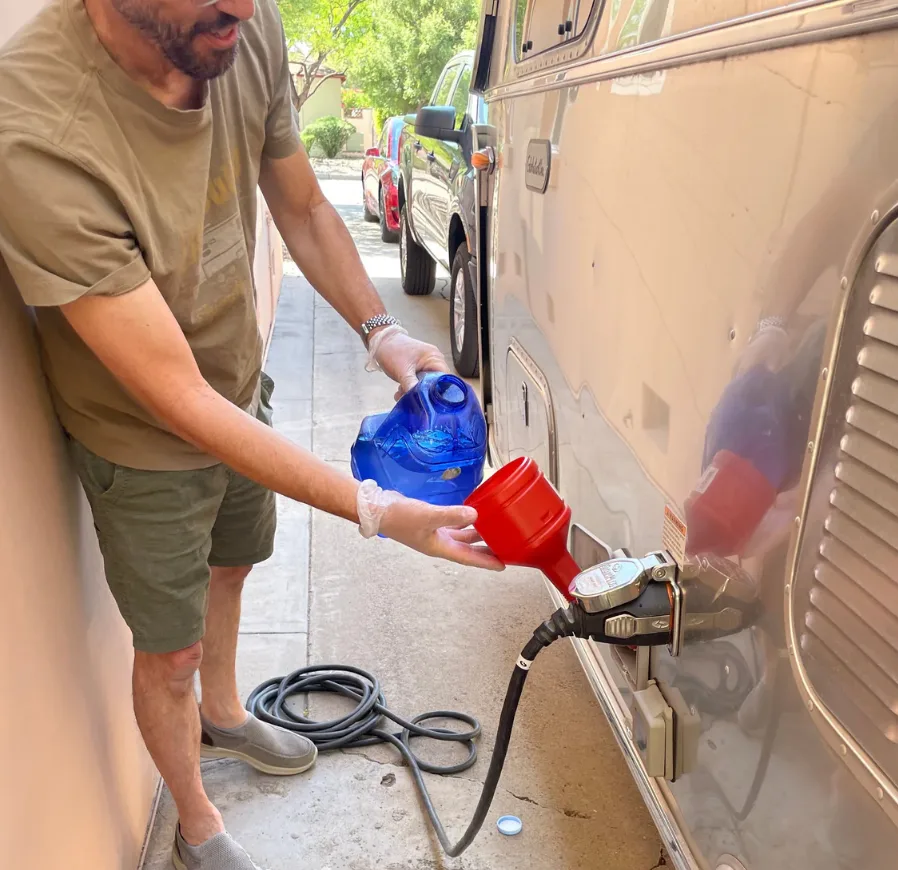
The sanitization protocol begins with a complete drain of the fresh tank, supply lines, and water heater through the low-point drains and water heater drain plug. A dilute sodium hypochlorite solution - approximately 1/4 cup of standard unscented household bleach per 15 gallons of tank capacity - is mixed and added to the tank through the fill inlet. The tank is filled completely with fresh water to dilute the bleach evenly and the pump is cycled to push the solution to every faucet, hot and cold, until chlorine odor is detected at each outlet.
The solution dwells in the system for a minimum of 4 hours, which is the contact time required to break down established biofilm. After the dwell period, the tank is drained completely and refilled three times with fresh water, flushing at every faucet until no chlorine odor is detectable. Faucet aerators are removed and soaked in fresh bleach solution independently, because aerators harbor bacterial colonies that the in-line flush does not reach reliably.
The pump inlet filter is cleaned or replaced. A final water sample is drawn from the kitchen cold faucet for visual clarity inspection before the service is closed out.
How This Repair Works On-Site in Palm Bay
- Call and describe the problem. Tell us what is happening, when it started, and what you have already checked. We ask a few questions to load the right parts before leaving the shop.
- We arrive at your Palm Bay or Brevard County location. No towing required. Your tech drives to your driveway, storage lot, or campsite - typically within 2 hours of your call.
- On-site diagnosis before recommending any work. We use the right test equipment for this repair type to find the actual root cause. We do not guess or replace parts speculatively.
- Written estimate provided at your location. You see the full cost before we start. You approve it before we touch anything.
- Same-visit repair when parts are on the van. Most common rv fresh water tank sanitization repairs are completed the same visit. If a part needs to be ordered, we schedule a follow-up and confirm the quote holds.
Common Causes and Related Repairs
Most rv fresh water tank sanitization issues in Palm Bay trace to one of three causes: age-related component wear accelerated by Florida's sustained UV heat and driveway storage conditions, corrosion from Indian River Lagoon salt air on eastern Palm Bay rigs, or deferred maintenance from an RV that sat in a driveway for months without being run or inspected.
When we diagnose a rv fresh water tank sanitization problem, we also check the water pump or water heater as part of the same visit - the two systems interact, and catching a secondary issue during the same call saves you a second service fee.
We tell you everything we find.
If a related issue needs attention but is not urgent, we note it in writing and let you decide when to address it.
Cost Factors for RV Fresh Water Tank Sanitization Repair in Palm Bay, FL
The main factors that affect the cost of your rv fresh water tank sanitization repair in Palm Bay are: the specific RV make, model, and year (which determines part size and access difficulty); the severity of the failure (a component that failed cleanly versus one that failed and damaged adjacent parts); and parts availability for your specific system. Palm Bay driveway service adds no extra travel fee for most locations within the city.
South Brevard County and Micco Road corridor service may add a small travel supplement depending on distance. Same-day parts availability varies by component - most common rv fresh water tank sanitization parts are on the van for same-day repair.
Less common components require a dealer or parts order that typically runs 1 to 3 business days. All estimates are fixed-price - the amount we quote is what you pay, with no hidden labor overruns.
Pricing note: Ranges shown are average costs for the Palm Bay, FL market based on common repair scenarios. The exact cost of your repair depends on your RV make and model, the severity of the issue, and parts availability.
Only a technician on-site can provide an accurate estimate after inspecting your RV. A written estimate is provided before any work begins - you approve it before we start.
RV Fresh Water Tank Sanitization FAQ
How often should I sanitize my RV fresh water tank?
Sanitize at least once per year, typically at dewinterization in spring before the first use of the season. Sanitize additionally if the coach was stored with water in the tank for more than two weeks, if water tastes or smells unusual, or if the tank was filled from an untreated well or questionable water source.
Is it safe to use bleach in an RV fresh water tank?
Yes - a dilute solution of unscented household sodium hypochlorite bleach is the standard approved method for potable water system sanitization and is used by water utilities worldwide. The key is correct dilution and thorough rinsing after the dwell period. Do not use scented bleach, bleach with surfactants added, or any other sanitizing chemical not rated for potable water use.
Why does my RV water smell like rotten eggs even after I change the filter?
An inline filter removes particulates and some taste compounds but does not kill bacteria living in the tank or supply lines upstream of the filter. The filter itself can become a colonization point if not replaced regularly. Odor that persists after filter replacement indicates bacterial contamination in the tank or lines that requires a full chlorine sanitization cycle to eliminate.
Can I sanitize my RV fresh water tank myself?
Yes - the bleach sanitization procedure is owner-serviceable if you can access the tank fill and all low-point drains. The most common owner mistake is insufficient dwell time (less than 4 hours) and incomplete rinsing that leaves chlorine taste in the system. RV Repair Palm Bay is available for tanks that are difficult to drain completely or when the odor problem persists after multiple owner sanitization attempts.
Does sanitization also clean the water heater?
The sanitization solution reaches the water heater through the supply lines and aerator flush. However, the water heater anode rod - present in Suburban and Atwood magnesium anode rod models - should be inspected and replaced if more than 50% depleted, because a spent anode rod produces sulfur odor from electrochemical reaction with the water supply independent of any bacterial contamination.
Can rv fresh water tank sanitization be repaired on-site in Palm Bay, FL?
Yes. Most rv fresh water tank sanitization repairs are completed on-site at your Palm Bay driveway, storage facility, or campsite without towing.
We carry the most common parts for this repair type on the service van. If a specific part needs to be ordered, we confirm the diagnosis and quote before you commit to the repair.
How long does rv fresh water tank sanitization take to repair?
Most rv fresh water tank sanitization repairs take 1.5 to 2.5 hours on-site at your Palm Bay location. Complex repairs involving multiple components or restricted access can take longer. We give you a realistic time estimate when we diagnose the problem before starting any work.
What does rv fresh water tank sanitization repair cost in Palm Bay, FL?
The service call is $299 to $399, covering travel to your Palm Bay location and the first hour of diagnostics. The cost of the repair depends on the specific parts needed and labor time.
We provide a written, fixed-price estimate before any work begins. You approve the price before we start.