RV Rubber Roof Resealing - Mobile RV Repair Palm Bay
RV Repair Palm Bay reseals EPDM and TPO rubber roofs right where your RV is parked - no storage lot required. We strip failed, chalky lap sealant from every seam, vent flange, and A/C curb, clean the membrane with an approved EPDM cleaner, and apply fresh Dicor self-leveling sealant in a continuous bead.
A standard 32-foot rubber roof takes one full technician day. This service stops existing leaks and prevents new ones from forming.
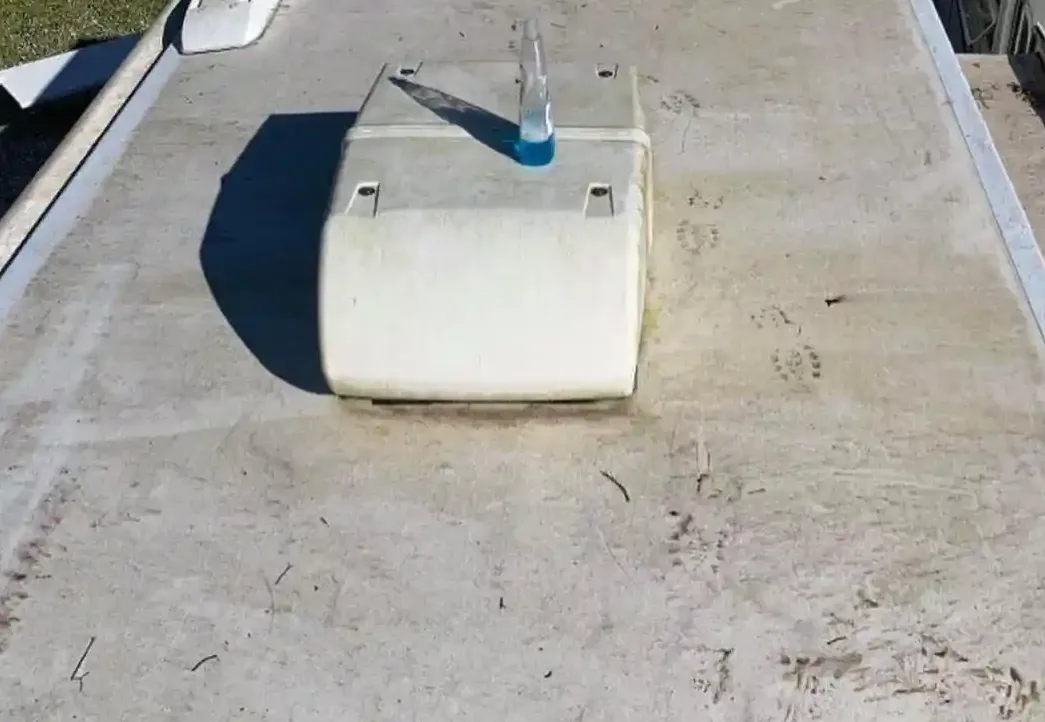
Palm Bay: RV roof repairs in Palm Bay require checking two water entry paths that campground-market repairs miss. The first is the standard roof path - UV-failed Dicor lap sealant at AC boot seals, vent bases, and antenna mounts that lets rain from Palm Bay's June through September rainy season into the ceiling cavity. The second is a Palm Bay-specific path: ground-level water entry from pooling on flat residential driveways.
Palm Bay's flat terrain means 2 to 3 inches of summer storm rain pools under and around parked RVs before it drains. Travel trailers and fifth wheels designed for graded campground pads are not waterproofed for this condition at the lower sidewall seams. Palm Bay rigs stored near Turkey Creek Sanctuary also develop moss and algae on EPDM roofs that must be cleared before resealing - sealant over biofilm lasts 6 months instead of 3 years.
We come to your Palm Bay driveway with a moisture meter, ladder, Dicor products, and EPDM materials.
Why Complete Sealant Removal Matters Before Resealing
Applying fresh lap sealant over old, hardened, or cracked sealant is the most common DIY resealing mistake. The new bead bonds to the surface of the old sealant rather than to the membrane itself, and when the old material continues to crack or pull away, it takes the new bead with it. RV Repair Palm Bay strips all existing sealant down to the membrane surface using plastic scrapers and solvent-dampened rags - no metal tools that could cut the membrane.
On EPDM roofs, the stripped area is wiped with Alpha Systems EPDM cleaner to remove the chalky oxidation layer and any remaining adhesive residue. This step is not optional - Dicor's own installation instructions require a clean, oxidation-free surface for the sealant to achieve its rated bond strength and flexibility. The cleaning step adds time to the job but is the difference between a reseal that lasts one season and one that lasts three or more.
The Full Reseal Sequence - Every Penetration on the Roof
A proper rubber roof reseal covers every point where anything passes through or attaches to the membrane. The sequence RV Repair Palm Bay follows begins at the front cap seam and works rearward in a systematic grid: front cap seam, all roof-to-sidewall lap seams on both sides, each vent flange in order, the A/C curb perimeter on all four sides and inner corners, the refrigerator roof vent, all antenna and cable entry points, solar mount feet and rail fasteners, slide topper rail screws, and finally the rear cap seam. Each point gets a continuous bead of membrane-appropriate sealant tooled to a smooth concave profile that directs water away from the penetration.
A standard 32-foot Class A motorhome typically has 40 to 60 individual sealant points. Missing even a few creates new entry points that negate the work done elsewhere on the roof.
How UV Load in Southern Climates Changes the Reseal Schedule
Dicor lap sealant is rated for annual inspection and resealing as needed in all climates, but Florida and Gulf Coast RV owners typically need a full reseal every 12 to 18 months rather than every two to three years as owners in northern climates might experience. The UV index in South Florida averages two to three times higher than in the northern Midwest during the summer months, and roof surface temperatures on a white EPDM membrane routinely reach 150 to 170 degrees Fahrenheit on a sunny afternoon. That thermal cycling - from 70 degrees overnight to 160 degrees by midday - is what accelerates sealant hardening and cracking.
MaxxAir and Fan-Tastic vent covers reduce heat buildup in the interior, but they do not reduce the UV load on the roof membrane itself. RV Repair Palm Bay recommends scheduling a roof inspection in early spring before peak heat season and again in the fall to catch any sealant that degraded over the summer before the winter rainy season begins.
How This Repair Works On-Site in Palm Bay
- Call and describe the problem. Tell us what is happening, when it started, and what you have already checked. We ask a few questions to load the right parts before leaving the shop.
- We arrive at your Palm Bay or Brevard County location. No towing required. Your tech drives to your driveway, storage lot, or campsite - typically within 2 hours of your call.
- On-site diagnosis before recommending any work. We use the right test equipment for this repair type to find the actual root cause. We do not guess or replace parts speculatively.
- Written estimate provided at your location. You see the full cost before we start. You approve it before we touch anything.
- Same-visit repair when parts are on the van. Most common rv rubber roof resealing repairs are completed the same visit. If a part needs to be ordered, we schedule a follow-up and confirm the quote holds.
Common Causes and Related Repairs
Most rv rubber roof resealing issues in Palm Bay trace to one of three causes: age-related component wear accelerated by Florida's sustained UV heat and driveway storage conditions, corrosion from Indian River Lagoon salt air on eastern Palm Bay rigs, or deferred maintenance from an RV that sat in a driveway for months without being run or inspected.
When we diagnose a rv rubber roof resealing problem, we also check the interior water damage as part of the same visit - the two systems interact, and catching a secondary issue during the same call saves you a second service fee.
We tell you everything we find.
If a related issue needs attention but is not urgent, we note it in writing and let you decide when to address it.
Cost Factors for RV Rubber Roof Resealing Repair in Palm Bay, FL
The main factors that affect the cost of your rv rubber roof resealing repair in Palm Bay are: the specific RV make, model, and year (which determines part size and access difficulty); the severity of the failure (a component that failed cleanly versus one that failed and damaged adjacent parts); and parts availability for your specific system. Palm Bay driveway service adds no extra travel fee for most locations within the city.
South Brevard County and Micco Road corridor service may add a small travel supplement depending on distance. Same-day parts availability varies by component - most common rv rubber roof resealing parts are on the van for same-day repair.
Less common components require a dealer or parts order that typically runs 1 to 3 business days. All estimates are fixed-price - the amount we quote is what you pay, with no hidden labor overruns.
Pricing note: Ranges shown are average costs for the Palm Bay, FL market based on common repair scenarios. The exact cost of your repair depends on your RV make and model, the severity of the issue, and parts availability.
Only a technician on-site can provide an accurate estimate after inspecting your RV. A written estimate is provided before any work begins - you approve it before we start.
RV Rubber Roof Resealing FAQ
How often should an EPDM rubber roof be resealed?
Most RV manufacturers and Dicor both recommend inspecting lap sealant every 12 months and resealing whenever you see cracking, shrinkage, or separation from the substrate. In hot southern climates the UV load accelerates hardening, so annual resealing is often necessary. Skipping even one season can allow seam water entry that wicks into wall cavities before it shows as an interior stain.
Can you reseal a rubber roof while it is still slightly wet from rain?
No - sealant adhesion requires a dry, clean surface, so we reschedule or wait if the roof deck is wet. We carry blowers and dry the surface if there is only light surface moisture remaining from overnight dew, but standing water or a recent rain requires a minimum of 2 hours of dry time before we start. Sealing over moisture traps it under the bead and causes premature lifting.
What is the difference between resealing an EPDM roof versus a TPO roof?
EPDM (black or white rubber membrane) uses solvent-based EPDM lap sealants like Dicor 501LSW, while TPO (thermoplastic polyolefin, typically white) requires a TPO-compatible formulation or heat-welded seam tape to prevent chemical incompatibility. Using the wrong product on TPO can cause the sealant to lift or bubble within one season. We verify your roof material before selecting any product.
Is it safe to walk on my RV's EPDM rubber roof during a reseal?
EPDM membranes are designed to support foot traffic with proper technique - flat-soled shoes, no heels or spikes, and stepping on the structural ribs rather than the unsupported spans between rafters. RV Repair Palm Bay technicians use roof-walk plywood panels on rigs with known rafter spacing issues to distribute weight and avoid creating low spots that collect standing water. We inspect the roof decking condition before walking it and alert you to any soft areas that indicate decking damage below.
Can I apply Flex Seal or other spray sealants over my rubber roof instead of Dicor?
Spray-applied rubberized coatings like Flex Seal are not compatible with EPDM membrane chemistry and will lift within one to two seasons, taking the bonded dirt and debris with them and leaving the seams in worse condition than before. Dicor and Alpha Systems products are specifically formulated to bond to EPDM without attacking the membrane. Using an incompatible product voids most RV roof warranties and makes the next legitimate reseal more difficult because the incompatible coating must be fully stripped before proper sealant can adhere.
How long does a full rubber roof reseal take on a 40-foot fifth wheel?
A 40-foot fifth wheel with a standard penetration count - four to six vents, two A/C units, one refrigerator vent, antennas, and solar mounts - typically requires six to eight hours of technician time for a full strip-and-reseal. We schedule reseal jobs as full-day appointments so there is no time pressure to rush the cleaning and tooling steps. Larger rigs with multiple slide toppers or extensive solar installations may require a second day for the slide topper rail and solar fastener work.
Can rv rubber roof resealing be repaired on-site in Palm Bay, FL?
Yes. Most rv rubber roof resealing repairs are completed on-site at your Palm Bay driveway, storage facility, or campsite without towing.
We carry the most common parts for this repair type on the service van. If a specific part needs to be ordered, we confirm the diagnosis and quote before you commit to the repair.
How long does rv rubber roof resealing take to repair?
Most rv rubber roof resealing repairs take 1.5 to 2.5 hours on-site at your Palm Bay location. Complex repairs involving multiple components or restricted access can take longer. We give you a realistic time estimate when we diagnose the problem before starting any work.
What does rv rubber roof resealing repair cost in Palm Bay, FL?
The service call is $299 to $399, covering travel to your Palm Bay location and the first hour of diagnostics. The cost of the repair depends on the specific parts needed and labor time.
We provide a written, fixed-price estimate before any work begins. You approve the price before we start.