RV Hydraulic Slide Repair - Mobile RV Repair Palm Bay
RV Repair Palm Bay services hydraulic slide systems including pump motor assemblies, solenoid valve banks, cylinder seals, and hydraulic lines. Hydraulic slides that drift inward under load or move unevenly side-to-side almost always have a leaking cylinder seal or a faulty hold solenoid. We carry Lippert HWH-compatible fluid, seal kits, and solenoid valves to complete most repairs in a single visit.
RV Repair Palm Bay services hydraulic slide systems including pump motor assemblies, solenoid valve banks, cylinder seals, and hydraulic lines. Hydraulic slides that drift inward under load or move unevenly side-to-side almost always have a leaking cylinder seal or a faulty hold solenoid. We carry Lippert HWH-compatible fluid, seal kits, and solenoid valves to complete most repairs in a single visit.
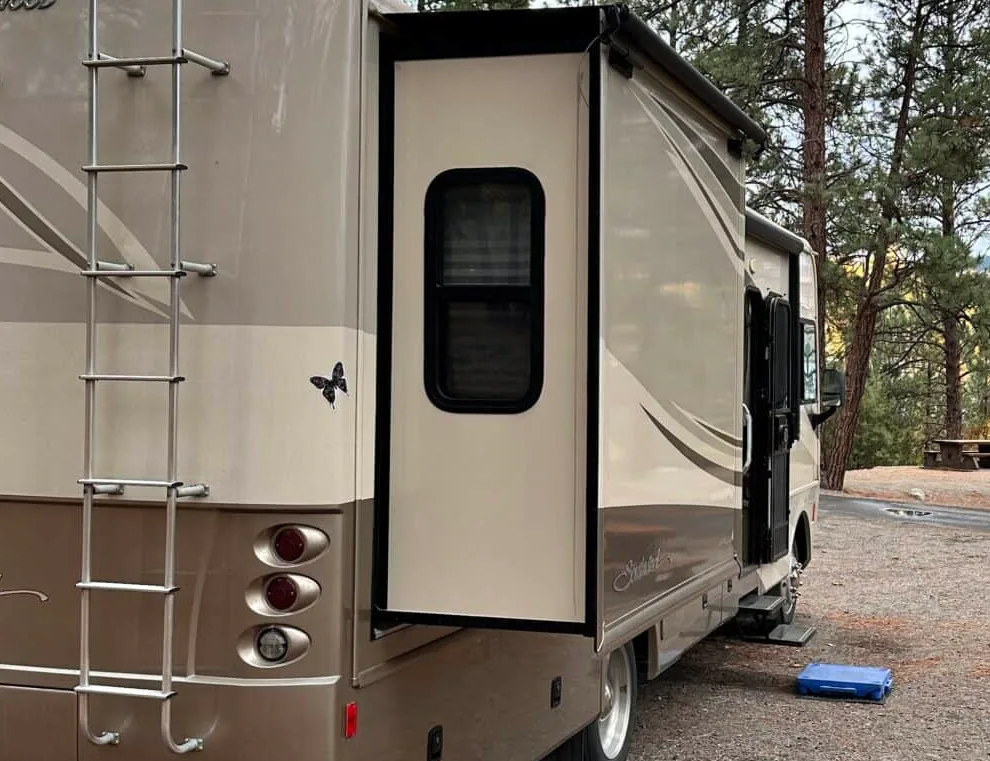
Palm Bay: RV slide-out repairs in Palm Bay start with wiper seal inspection - not motor diagnosis. Palm Bay's UV load desiccates wiper seal rubber faster than coastal environments. Seals stored in full Palm Bay sun through the summer lose elasticity and develop cracks along the contact edges.
By October, seals that were flexible in April may crumble at the touch. A brittle seal creates rail drag that causes motor overload, drawing excess current and eventually tripping the thermal overload. Diagnosing the motor without first assessing seal condition leads to repeat failures.
We also lubricate the full rail length before any other diagnostic step on Palm Bay slide calls - a dry rail looks like a motor failure on most slide systems. We come to your Palm Bay driveway with Lippert, Schwintek, and HWH parts stocked on the van.
How RV Hydraulic Slide Systems Work
Hydraulic slide systems are found almost exclusively on larger Class A motorhomes where slide room weight exceeds what electric rack-and-pinion motors can handle. HWH Corporation is the dominant supplier, with Lippert hydraulic and Power Gear HydraLink appearing on a smaller share of coaches. All three systems use a 12V DC gear pump to pressurize a hydraulic circuit, a manifold with solenoid-controlled valves directing fluid to extension or retraction chambers in the slide cylinder, and a reservoir that stores ATF or hydraulic fluid between uses.
When a slide fails to move, the fault is almost always in one of three places: electrical supply to the pump, a stuck solenoid valve, or internal pump wear preventing pressure buildup. RV Repair Palm Bay carries a pressure gauge rated to 3,000 PSI to test pump output directly. A pump building rated pressure but not moving the slide points to a solenoid.
A pump running without building pressure has an internal failure. This field test eliminates hours of component swapping.
HWH Hydraulic Systems: Common Faults and Fixes
HWH systems are well-engineered and long-lived when maintained, but they develop predictable failure modes after 10 to 15 years. The most common is solenoid coil burnout - the coils actuating directional valves are 12V DC components exposed to engine heat and road vibration, and their resistance increases until they can no longer open the valve. A failed solenoid reads as a short or open circuit on a DMM and costs far less than the manifold it mounts to.
The second most common HWH fault is pump motor brush wear. HWH pumps use a brush-type DC motor that gives audible warning as it ages - a high-pitched whine growing louder over months before the pump stops building pressure. RV Repair Palm Bay stocks solenoid coils and replacement brushes for common HWH configurations.
The third fault is a worn reservoir seal allowing air into the pump inlet, producing a cavitating sound and inconsistent pressure. All three are diagnosable on-site with the coach parked.
Hydraulic Slide Fluid Service: What Most RV Owners Miss
HWH specifies Dexron III ATF for its hydraulic systems. Lippert Hydraulic and Power Gear HydraLink specify hydraulic fluid formulations that differ in viscosity and additive package. Using the wrong fluid accelerates seal wear, causes solenoid valve sticking, and can void remaining warranty coverage on newer systems.
RV Repair Palm Bay always verifies the correct fluid specification from manufacturer data before adding or exchanging fluid in any hydraulic slide system. Beyond fluid type, fluid condition matters - hydraulic fluid that has absorbed water or degraded thermally turns dark brown with a burned smell and loses its lubricity, accelerating pump wear. We check fluid condition on every hydraulic slide call and recommend a full drain-and-fill when fluid shows contamination signs, even if the presenting complaint is electrical.
A clean hydraulic circuit extends solenoid and cylinder seal life by years. Fluid changes on HWH and Lippert systems are completed on-site in under an hour and do not require any special lifting equipment.
How This Repair Works On-Site in Palm Bay
- Call and describe the problem. Tell us what is happening, when it started, and what you have already checked. We ask a few questions to load the right parts before leaving the shop.
- We arrive at your Palm Bay or Brevard County location. No towing required. Your tech drives to your driveway, storage lot, or campsite - typically within 2 hours of your call.
- On-site diagnosis before recommending any work. We use the right test equipment for this repair type to find the actual root cause. We do not guess or replace parts speculatively.
- Written estimate provided at your location. You see the full cost before we start. You approve it before we touch anything.
- Same-visit repair when parts are on the van. Most common rv hydraulic slide repair repairs are completed the same visit. If a part needs to be ordered, we schedule a follow-up and confirm the quote holds.
Common Causes and Related Repairs
Most rv hydraulic slide repair issues in Palm Bay trace to one of three causes: age-related component wear accelerated by Florida's sustained UV heat and driveway storage conditions, corrosion from Indian River Lagoon salt air on eastern Palm Bay rigs, or deferred maintenance from an RV that sat in a driveway for months without being run or inspected.
When we diagnose a rv hydraulic slide repair problem, we also check the slide rail alignment or motor replacement as part of the same visit - the two systems interact, and catching a secondary issue during the same call saves you a second service fee.
We tell you everything we find.
If a related issue needs attention but is not urgent, we note it in writing and let you decide when to address it.
Cost Factors for RV Hydraulic Slide Repair Repair in Palm Bay, FL
The main factors that affect the cost of your rv hydraulic slide repair repair in Palm Bay are: the specific RV make, model, and year (which determines part size and access difficulty); the severity of the failure (a component that failed cleanly versus one that failed and damaged adjacent parts); and parts availability for your specific system. Palm Bay driveway service adds no extra travel fee for most locations within the city.
South Brevard County and Micco Road corridor service may add a small travel supplement depending on distance. Same-day parts availability varies by component - most common rv hydraulic slide repair parts are on the van for same-day repair.
Less common components require a dealer or parts order that typically runs 1 to 3 business days. All estimates are fixed-price - the amount we quote is what you pay, with no hidden labor overruns.
Pricing note: Ranges shown are average costs for the Palm Bay, FL market based on common repair scenarios. The exact cost of your repair depends on your RV make and model, the severity of the issue, and parts availability.
Only a technician on-site can provide an accurate estimate after inspecting your RV. A written estimate is provided before any work begins - you approve it before we start.
RV Hydraulic Slide Repair FAQ
My hydraulic slide slowly drifts inward on its own - is that a big problem?
Inward drift under load means a hold solenoid is leaking internally or a cylinder seal is bypassing fluid. Left unaddressed, the cylinder rod will score and make the repair significantly more expensive. We can isolate which solenoid or cylinder is at fault with a simple pressure-hold test.
What hydraulic fluid should be used in an HWH or Lippert hydraulic slide system?
Most HWH and Lippert systems specify a Dexron III ATF or a dedicated hydraulic slide fluid - never generic hydraulic oil or brake fluid, which will swell the seals. We always verify the manufacturer spec plate on the pump reservoir before adding or replacing fluid.
One side of my hydraulic slide extends faster than the other - what causes that?
Uneven extension points to a flow restrictor that is partially blocked on the slow side, or a cylinder that has lost seal integrity and is bypassing fluid under pressure. We check flow restrictors first since they are inexpensive to clean or replace, then pressure-test each cylinder individually.
How often should RV hydraulic slide fluid be changed?
HWH recommends inspecting fluid every two years and changing it when the fluid shows contamination. RV Repair Palm Bay recommends a fluid exchange every three to five years under normal use and annually in rigs stored outdoors in high-humidity climates where moisture absorption is accelerated.
Can a hydraulic slide leak be repaired without replacing the whole cylinder?
Yes - most rod seal leaks on HWH and Lippert cylinders are repairable with a seal kit without replacing the cylinder body. We remove the cylinder, replace the rod and piston seals on a clean bench surface, and reinstall with correct torque on all fittings. Full cylinder replacement is only necessary when the rod itself is scored or the barrel is cracked.
My hydraulic slides work but make a loud whining noise - is that dangerous?
A whining pump is an early warning sign of brush wear or air cavitation in the inlet. It is not immediately dangerous, but continuing to run the pump in that condition accelerates internal wear toward complete pump failure. RV Repair Palm Bay schedules a diagnostic before a noisy pump becomes a coach parked with all slides extended mid-trip.
Can rv hydraulic slide repair be repaired on-site in Palm Bay, FL?
Yes. Most rv hydraulic slide repair repairs are completed on-site at your Palm Bay driveway, storage facility, or campsite without towing.
We carry the most common parts for this repair type on the service van. If a specific part needs to be ordered, we confirm the diagnosis and quote before you commit to the repair.
How long does rv hydraulic slide repair take to repair?
Most rv hydraulic slide repair repairs take 1.5 to 2.5 hours on-site at your Palm Bay location. Complex repairs involving multiple components or restricted access can take longer. We give you a realistic time estimate when we diagnose the problem before starting any work.
What does rv hydraulic slide repair repair cost in Palm Bay, FL?
The service call is $299 to $399, covering travel to your Palm Bay location and the first hour of diagnostics. The cost of the repair depends on the specific parts needed and labor time.
We provide a written, fixed-price estimate before any work begins. You approve the price before we start.